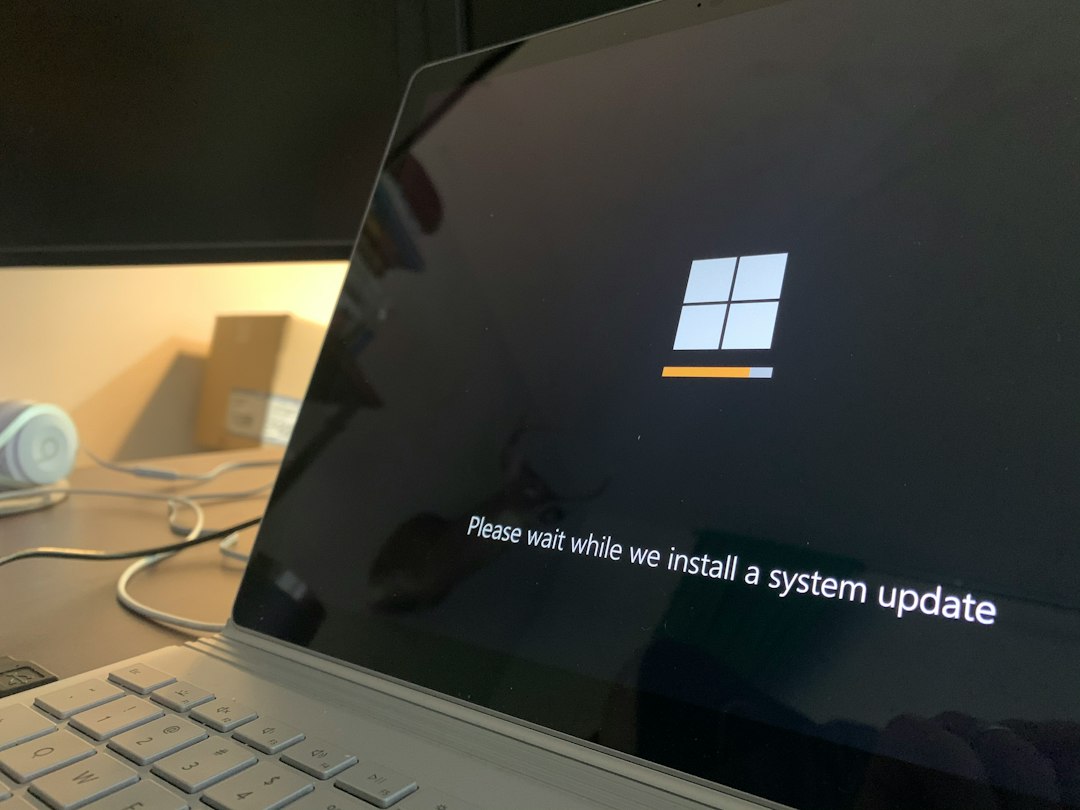
The email arrived on a Tuesday, the kind of Tuesday that feels indistinguishable from any other until it suddenly isn't. A designer I'd worked with for years — sharp, meticulous, the sort of person who color-labels her calendar — sent me a message that read, in its entirety: "Did Figma change something? Everything feels wrong."
She hadn't read the changelog. Neither had I. Neither, I'd wager, had most of the hundred million people who opened that app that morning and felt the same low-grade wrongness she was describing — a repositioned panel here, a renamed menu item there, the muscle memory of months quietly invalidated overnight. We updated because the little badge told us to. We updated the way you nod along in a meeting you stopped following ten minutes ago.
This is the dominant relationship most of us have with software changelogs in 2025: we ignore them right up until ignoring them costs us something.
The Document That Was Never Really for You
Changelogs have a strange genealogy. In the early days of open-source development, the CHANGELOG file was a gift from maintainers to other developers — a breadcrumb trail through the codebase, written in the shorthand of people who understood what "refactored auth middleware" actually implied. It was technical debt made legible, one version at a time. The intended reader wore the same mental model as the writer.
Then software became a consumer product, and the changelog got dressed up for a different audience without anyone deciding, exactly, who that audience was. The result is a document that often satisfies no one completely. Engineers find it too vague; regular users find it impenetrable or, worse, written in that peculiar corporate cheerfulness — "We've made some exciting improvements to your experience!" — that communicates nothing while performing transparency.
I've spent an embarrassing number of hours in the last decade reading app store release notes. The genre has its own dark comedy. "Bug fixes and performance improvements" is the lorem ipsum of the changelog world: technically a sentence, functionally a shrug. Apple's own apps are among the worst offenders, which is either ironic or entirely predictable depending on your disposition toward Cupertino.
But here's what that vagueness actually costs us, and this is the part that took me longer to see: when we don't know what changed, we can't calibrate our trust.
Trust Is a Versioned System
Software trust isn't binary. You don't simply trust an app or not trust it — you trust a specific version of it, the one that has proven itself against your particular workflows and failure modes. Every update is, in a real sense, a renegotiation of that contract. The changelog is supposed to be the terms.
When those terms are withheld or obscured, we're left in a peculiar epistemic position: we're using software whose behavior we can no longer fully predict, running on a foundation that shifted while we slept, and we've agreed to all of it by tapping "Update All" without a second glance.
I don't think this is entirely our fault. The auto-update paradigm — pushed hard by platform holders for legitimate security reasons — has conditioned us to treat updates as maintenance, not decisions. When your building's HVAC system gets serviced, you don't read the technician's notes; you just expect the temperature to be the same when you walk in. We've imported that model into software, where it fits poorly, because software isn't infrastructure in the passive sense. It's a tool with opinions, and those opinions change.
The designer who messaged me eventually found the relevant changelog entry buried in a "What's New" modal she'd dismissed three times. The change was documented. It just wasn't surfaced in a way that treated her time or her expertise as worth respecting.
When the Update Is the Incident
There's a category of changelog that only gets written in retrospect: the post-mortem. And these, paradoxically, are often the most honest documents a software company ever produces.
In 2021, Basecamp published an internal memo that became public and reshaped how a lot of people thought about company culture. But I keep thinking about a different kind of Basecamp document — the kind they and companies like them write after an outage, when the incentive to be vague has been temporarily overridden by the need to explain. Post-mortems name the specific commit. They identify the exact line. They say "we introduced a regression in the caching layer" rather than "we made improvements to reliability."
The post-mortem is the changelog freed from marketing. It's what the changelog would look like if the people writing it weren't also worried about how it would affect the quarterly review or the app store rating.
I've started to think of the gap between these two documents — the cheerful release note and the forensic post-mortem — as a measure of a company's actual relationship with its users. The wider that gap, the more the changelog is functioning as reputation management rather than communication.
Some companies are trying to close it. Linear, the project management tool that has quietly become a favorite among developers who care about craft, publishes changelogs that read like they were written by someone who genuinely believes you'll want to know the details. Specific. Sometimes even opinionated — they'll tell you why a decision was made, not just what was changed. It's a small thing that turns out to be a large thing.
What We Lose When We Stop Paying Attention
There's a skill — undervalued, slightly tedious, genuinely useful — in reading changelogs the way a careful reader reads a contract. Not every line, but with enough attention to notice when something shifts.
I learned this the hard way with a writing tool I'd relied on for years. A changelog entry I'd skimmed mentioned that the local storage model was being "updated to improve sync performance." I didn't pause on that. Three weeks later, I discovered that a folder of drafts I'd kept deliberately offline — notes I wasn't ready to cloud-sync, for reasons that felt private at the time — had been quietly uploaded during a background process I hadn't opted into. The changelog had told me, technically. I just hadn't read it as a warning.
This is the practical argument for changelog literacy, and it's a narrower argument than the philosophical one about trust. Sometimes the document is trying to tell you something that will matter to you specifically, and the only way to find out is to look.
But I want to be careful not to make this entirely the user's problem, because it isn't. The changelog is a genre that the software industry has allowed to atrophy precisely because the incentives run the other way. Detailed, honest release notes invite scrutiny. They surface the decisions that were made, which means they surface the decisions that could be questioned. Vagueness is a form of insulation.
The tutorial-industrial complex — the endless stream of "how to use the new X feature" content that floods YouTube and newsletters after every major update — exists partly to fill the vacuum that bad changelogs leave. We've outsourced the explanation of software changes to a cottage industry of creators who are themselves reading the changelog for the first time, on camera, working it out as they go.
There's something almost endearing about that, until you realize it means the authoritative account of what your software does now is a twelve-minute video with mid-roll ads.
The Version You Thought You Knew
My designer friend eventually adapted to the new Figma layout. She always does — she's good at that, at absorbing change and recalibrating. But she mentioned, a few weeks later, that she'd started actually reading the release notes before updating. Not all of them. Not religiously. Just enough to know what she was agreeing to.
It's a small discipline. It doesn't scale as a solution to an industry-wide problem. But it points at something worth naming: the changelog, at its best, is an act of respect — the maker saying to the user, here is what we changed, and here is why, and here is what it might mean for you. When that gesture is made honestly, it's one of the more quietly civilized things that happens in the relationship between software and the people who depend on it.
When it isn't made — when the note says "performance improvements" and means "we moved your data" — we've lost something harder to version-control than code.
The question worth sitting with isn't how to make users read changelogs better. It's why we built a culture where the document that explains what our tools are doing to us became the one nobody reads.