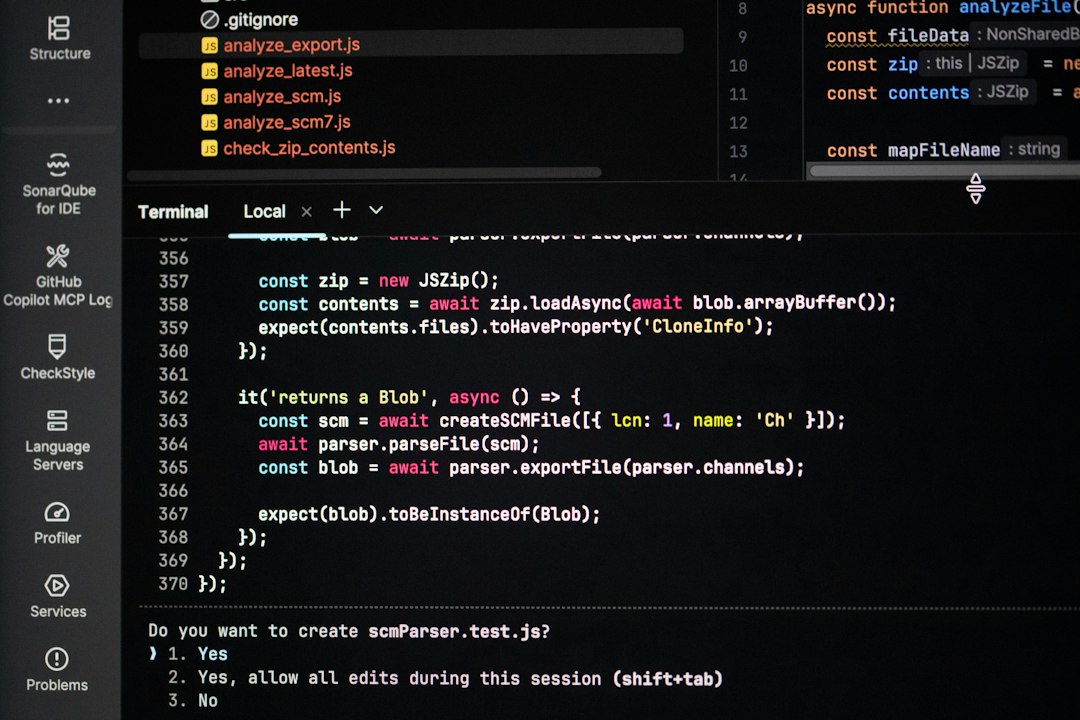
There is a file sitting in the root directory of almost every serious software project, and almost nobody reads it. It is called CHANGELOG.md, or sometimes HISTORY.txt, or sometimes just "Release Notes" in a tab that loads slowly and gets closed before it finishes. I have been guilty of this for twenty years. I click "Update" the way I click "Agree" — with the vague faith that someone, somewhere, made a reasonable decision on my behalf.
Last spring I was debugging a workflow that had quietly broken over the winter. A tool I used daily — a command-line utility for wrangling structured data — had shipped a minor version bump in December. Minor. Point-release. The kind of update whose changelog entry probably read something like "improved default behavior for edge cases." What it had actually done was flip a default flag that changed how empty strings were handled. My pipeline, which processed thousands of rows of exported data every week, had been silently dropping records for three months before I noticed the pattern.
I found the answer in the changelog. It was on line 47 of a 200-line document I had never once opened.
When "Minor" Is a Lie We All Agreed To
Semantic versioning — the MAJOR.MINOR.PATCH framework that most modern software follows — promises a kind of grammar. A major version change breaks things. A patch fixes them. A minor update adds without removing. It is a tidy system, and it is violated constantly, usually in good faith.
The problem is that software behavior is not a simple hierarchy. A change that is architecturally minor can be behaviorally catastrophic for a specific user. The developers who shipped that flag flip were not wrong, exactly — the old behavior was an edge case, and the new default is more sensible for most people. But "most people" is a statistical claim, and statistics have remainders. I was a remainder.
What strikes me now is not the bug itself, which was fixable in an afternoon. What strikes me is the three months of quiet wrongness that preceded the fix. The tool had been shaping my output the entire time — trimming data I thought I was keeping, producing reports that felt slightly off but never quite wrong enough to trigger alarm. I had adapted to the new behavior without knowing I was adapting. I had started double-checking certain columns more carefully, had added a manual review step I couldn't explain if you'd asked me why. The software changed, and then I changed, and the changelog sat there unread, holding the explanation for both.
The Invisible Curriculum of Version Updates
This is the thing that nobody writes about when they talk about software tools: they are not static instruments. A hammer does not update itself. A spreadsheet application does, and every update is a small lesson delivered without a syllabus.
Think about what happened when a major note-taking application reorganized its sidebar a few years ago. Thousands of people rewrote their organizational habits without being asked, without being told, and without — in most cases — understanding why they suddenly felt friction in workflows that used to feel smooth. The company called it a UI refresh. For users, it was closer to coming home to find that someone had moved all the furniture two inches to the left. Nothing is broken. Everything feels wrong.
Or consider the slow drift in how autocomplete has trained a generation of writers. The feature exists across email clients, word processors, document editors. Each one has been quietly updated, its suggestion model retrained, its confidence threshold adjusted. We do not notice the individual updates. We notice, years later, that we have developed a habit of accepting the first reasonable phrase rather than searching for the precise one. The changelog for that habit does not exist. It is the aggregate of a hundred minor releases across a dozen applications.
Software updates are an invisible curriculum, and we are perpetual students who never registered for the class.
The Changelog as Honest History
Here is the counterargument I have to take seriously: maybe this is fine. Tools evolve, people adapt, and the adaptation is often net positive. The flag flip that broke my pipeline also, presumably, fixed something for a larger group of users. The sidebar reorganization probably improved discoverability for new users even as it annoyed veterans. Progress requires friction, and friction is not the same as harm.
I believe this. And I also think it lets us off a hook we should stay on.
Because the changelog — the actual document, the one nobody reads — is a form of honest history that we have collectively decided to treat as bureaucratic noise. Every entry in a well-maintained changelog is a decision made by a person, often after argument, often with tradeoffs acknowledged. The best changelogs I have ever read feel almost like letters. We changed this because the old way caused this problem. We know some of you relied on the old behavior. Here is how to restore it. That is a human voice taking responsibility for a human choice.
When we skip the changelog, we are not just missing technical information. We are opting out of a conversation that the developers were, in many cases, trying to have with us. We are choosing to be shaped rather than informed.
What It Would Mean to Actually Pay Attention
I am not going to tell you to read every changelog for every application you use. That would be a different kind of essay — a productivity manifesto, probably with a numbered list — and it would be wrong. The volume is impossible. The signal-to-noise ratio in most release notes is brutal. "Bug fixes and performance improvements" is not a changelog entry; it is an apology with the apology removed.
But I have started doing something smaller, and it has changed the way I relate to the tools I depend on most. For the five or six applications that sit at the center of my actual work — the ones whose quirks I know the way you know a coworker's habits — I read the release notes before I update. Not every line. But enough to catch the word "default" or "behavior" or "deprecated," the words that signal that something about the contract between me and the software is being renegotiated.
It takes maybe four minutes. What it gives back is something harder to quantify: a sense of agency over my own adaptation. Instead of discovering three months later that I have been unconsciously compensating for a change I didn't know happened, I know the change is coming. I can decide how I want to respond to it. I can push back, or I can lean in, but I am doing it with my eyes open.
There is a version of technical literacy that is about knowing how to use tools. I am more interested in a version that is about knowing how tools use you — how they shape your habits, constrain your thinking, and quietly rewrite your defaults along with their own. The changelog is one of the few places where that process is documented in plain language, by the people doing it, in something close to real time.
My pipeline is fixed now. I added a validation step that would catch the same class of silent error in the future, regardless of what any future update decides to do with empty strings. But I think about those three months sometimes — the reports I sent, the decisions that were made from them, the small wrongness compounding quietly beneath a surface that looked fine.
The software was honest about what it had done. The changelog said so, on line 47.
I just wasn't in the room for the conversation.