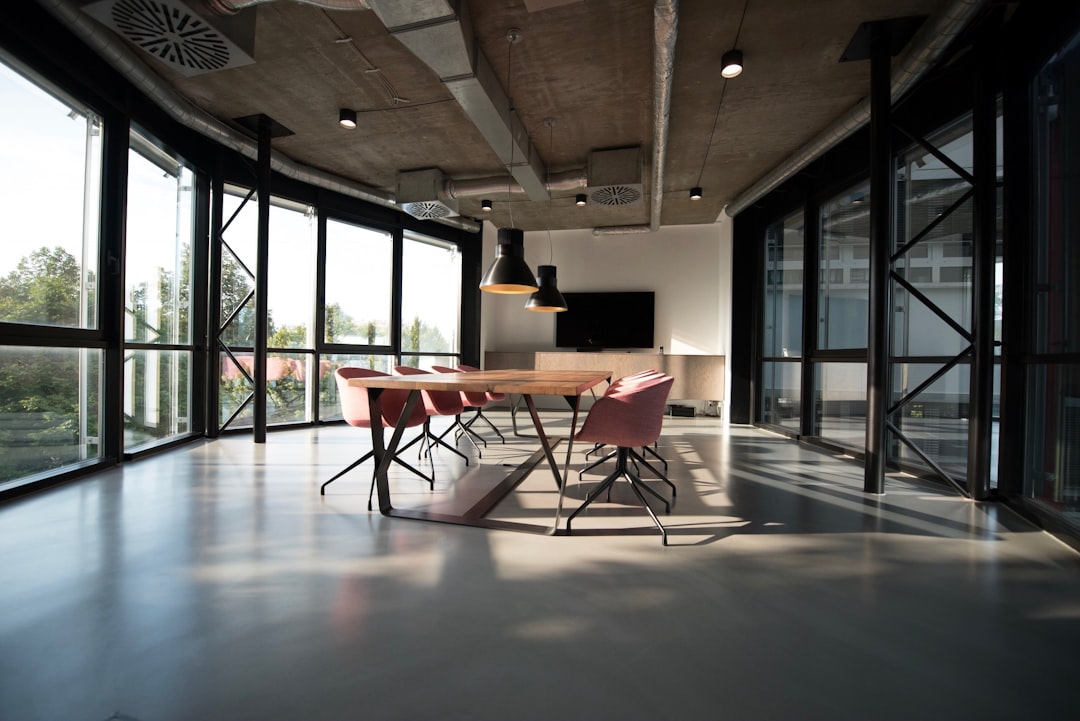
There was a whiteboard on the fourth floor of a building in SoMa that nobody ever fully erased. It had been there so long that the older markers had ghosted into the surface — a palimpsest of sprint plans, org charts, someone's ambitious revenue model from 2019. When the office closed in March 2020, that whiteboard was mid-thought. A half-finished diagram, a few action items, somebody's name circled in red. As far as I know, it's still there.
I think about that whiteboard more than is probably reasonable. It has become, in my mind, a kind of monument to the question that keeps surfacing in every conversation about how we work now: is remote work killing office culture, or did office culture just finally get called on what it actually was?
What Office Culture Was Actually Made Of
When people talk about missing the office, they tend to reach for the big abstractions — collaboration, spontaneity, energy. What they're usually describing, if you press them, is something much more granular. It's the conversation that started at the coffee machine and somehow became a product decision. It's the way you could read a room before a meeting even officially began, the body language that told you the VP was in a bad mood and today was not the day. It's the junior employee who got noticed not because she sent a clever email but because she said the right thing at the right moment in a hallway.
Office culture, at its most functional, was a system for transmitting unwritten information. Not the stuff in the wiki, not the documented processes — the texture of how decisions actually got made, who actually held influence, which rules were real and which were performative. You absorbed it by proximity. You learned it by being in the room.
That transmission mechanism is genuinely difficult to replicate over Slack. Not impossible — but difficult in ways that compound over time, especially for people who joined a company after the offices closed. They didn't inherit the culture; they inherited a Notion page that described it.
The Things We Quietly Stopped Doing
I've spoken to enough people now — engineers, designers, managers, executives — that a pattern has emerged in what they describe losing. Almost nobody misses the commute. Almost nobody misses the open-plan noise, the mandatory fun, the birthday cake in the conference room. What they miss is harder to name.
One product manager I know described it as "the cost of presence." When you were in the office, you were paying a kind of social tax just by being there — you were visible, available, legible to your colleagues in ways that required no effort. Remote work shifted that tax. Now visibility requires active effort: the well-timed message, the camera-on policy, the deliberate over-communication that never quite feels natural.
The people who adapted most easily to remote work tended to be those who were already good at written communication, already comfortable with asynchronous rhythms, already, in some sense, operating like freelancers inside a company. For them, remote work wasn't a loss — it was a liberation from a system that had never quite fit. For others, particularly those whose careers had been built on relational intelligence and physical presence, it felt like the game had changed and nobody had told them the new rules.
That asymmetry is part of what makes the remote work debate so persistent. It's not one debate. It's several, happening simultaneously, between people with genuinely different experiences of what the office was.
The Argument That Culture Was Already Broken
Here's the counter-argument, and it deserves real consideration: a lot of what we're mourning was never as good as we've made it in retrospect.
Office culture, for many people, was a system that rewarded proximity and penalized difference. It rewarded the extrovert who could dominate a room and punished the introvert who needed time to think before speaking. It rewarded the person who could stay late and penalized the parent who had to leave at five. It rewarded the person who looked and sounded like the people already in power, and it did so invisibly, through the thousand small transactions of presence that nobody ever wrote down.
Remote work, for all its friction, cracked that open. Suddenly the playing field tilted slightly toward competence over charisma, toward the quality of your thinking over the confidence of your delivery. The person in Tulsa could be in the same meeting as the person in Manhattan, and the distance collapsed some of the old hierarchies of access.
I don't want to be naive about this. Remote work introduced its own inequities — the home office versus the kitchen table, the fast internet versus the slow, the household with children versus the one without. But the critique of office culture that remote work made visible was real, and we shouldn't let nostalgia paper over it.
What Hybrid Actually Means in Practice
The word "hybrid" has become a kind of corporate peace treaty — a way of saying we're not going to resolve this tension, we're going to live inside it. Most large companies have settled into some version of it: two or three days in the office, the rest at home, with enough flexibility to keep people from quitting but enough presence to keep executives from panicking.
What hybrid has actually produced, in many places, is a kind of cultural no-man's-land. The office days are often the same days for everyone, which means the building is either overcrowded on Tuesdays and Wednesdays or eerily empty on Mondays and Fridays. The spontaneous collision that office culture depended on — the hallway conversation, the impromptu lunch — doesn't happen on a schedule. You can't mandate serendipity.
What you can do, and what the better-managed hybrid companies seem to understand, is design for intentionality. If the office isn't the default anymore, it has to earn its place. It has to be the place where you do the things that genuinely require physical presence — the hard conversation, the creative session that needs a whiteboard, the onboarding that needs a face. The companies that have figured this out treat the office as a tool rather than a container. They use it deliberately rather than habitually.
That's a harder thing to build than the old model, which required no design at all. You just put people in a building and let culture accumulate. The new version requires you to be intentional about something that used to happen by accident, and intentionality is exhausting in ways that accident never was.
The Whiteboard Is Still Half-Finished
So is remote work killing office culture? I keep turning the question over and I keep arriving at the same unsatisfying answer: it depends on what you think office culture was for.
If office culture was primarily a mechanism for control — a way of making workers visible, measurable, present — then yes, remote work has done significant damage to it, and good riddance to some of that damage. If office culture was primarily a mechanism for human connection — for the slow accumulation of trust and shared context that makes organizations actually function — then remote work has revealed how fragile that mechanism was, how much it depended on physical proximity we took for granted.
The honest answer is that it was both, in proportions that varied by company, by team, by individual experience. Which means the loss is real and the liberation is real and neither side of the debate is entirely wrong.
What I keep coming back to is that half-finished diagram on a whiteboard in an empty building. The question it raises isn't really about remote work. It's about what we were actually building together, and whether we had the presence of mind to know it while we were in the room.
Maybe the more useful question isn't whether remote work is killing office culture. Maybe it's whether office culture, in the form we knew it, was ever something we consciously chose — or just something that happened to us while we were busy showing up.