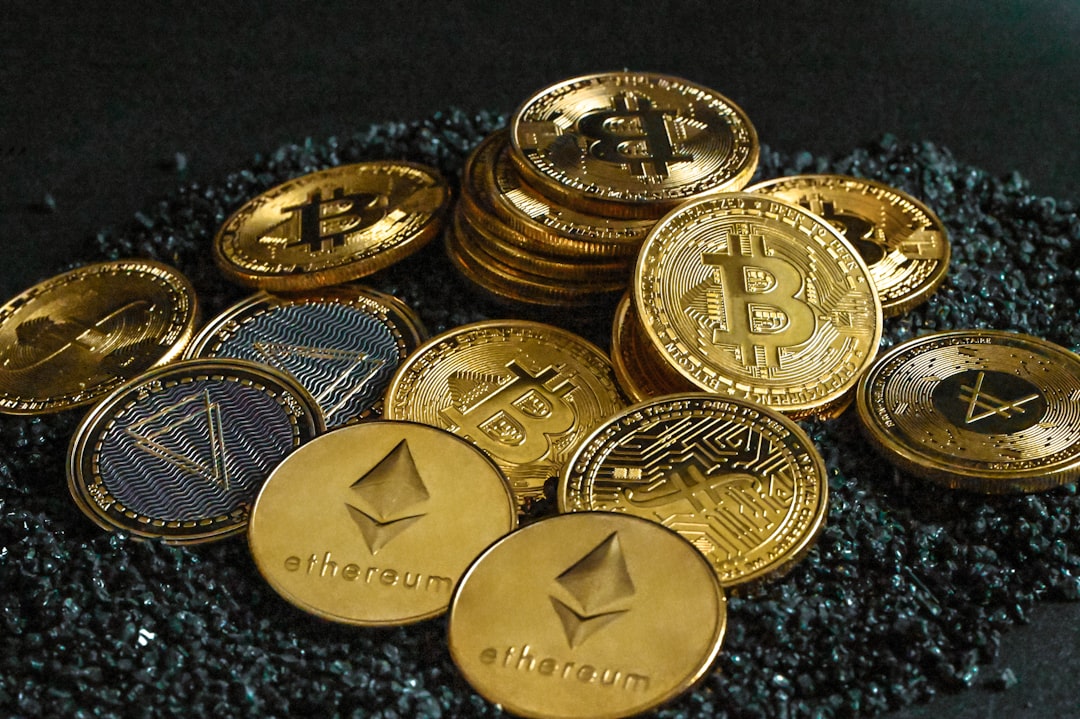
Most of the people asking whether cryptocurrency is actually useful already suspect the answer is complicated. They've watched Bitcoin climb to $69,000 in November 2021, crater to $16,000 a year later, and then somehow claw back above $60,000 in 2024. They've seen the NFT bubble inflate and pop. They've read the breathless predictions and the equally breathless post-mortems. And they still can't get a straight answer.
So let me try to give one.
The honest version: cryptocurrency is genuinely useful for a narrow set of problems, largely useless for the things it was originally marketed to do, and actively harmful in a few specific contexts. That's not a hot take — it's just what a decade of watching this space produces if you're paying attention.
What Crypto Was Supposed to Solve
The Bitcoin whitepaper, published by Satoshi Nakamoto in October 2008, made a specific claim: peer-to-peer electronic cash that removes the need for a trusted third party. No banks. No payment processors. Just two people transacting directly.
It was a response to a real problem. The 2008 financial crisis had just demonstrated, in spectacular fashion, that the trusted third parties weren't particularly trustworthy. The timing was deliberate.
But here's what happened in practice. Bitcoin became a store of value — digital gold, in the popular framing — rather than a medium of exchange. You don't buy coffee with Bitcoin. The transaction fees alone would make that absurd; at peak congestion in 2021, a single Bitcoin transaction cost upward of $60 in fees. Confirmation times run ten minutes on average. Visa processes roughly 1,700 transactions per second. Bitcoin's base layer manages about 7.
The "peer-to-peer cash" thesis, for everyday consumer payments, failed. Not because the technology is broken, but because the incentive structure pushed it toward speculation instead.
Where It Actually Works
Set aside the original pitch. What does cryptocurrency actually do well?
Cross-border remittances. This is the clearest real-world use case. If you're a migrant worker sending money from the United States to the Philippines, traditional wire transfers through services like Western Union can cost 5–8% in fees and take days. Stablecoins — USDC, USDT — pegged to the dollar can move in minutes for cents on the TRON or Solana networks. The friction reduction is real and measurable.
The caveat: you need someone on the receiving end who can convert crypto back to local currency. That on-ramp/off-ramp infrastructure is still patchy in many markets. It works well in countries with established crypto exchanges; it's harder in places where it would matter most.
Transactions under authoritarian financial systems. Venezuelans, Argentines dealing with 100%+ annual inflation, Iranians locked out of SWIFT — these aren't hypothetical users. When your local currency loses half its value in a year, holding USDC is a rational hedge. When your government can freeze bank accounts for political reasons, a self-custodied wallet is a genuine tool for financial sovereignty.
I'm not romanticizing this. Most people in wealthy democracies don't need this. But the use case is real, and dismissing crypto entirely ignores the people for whom it solves an actual problem.
Programmable money and DeFi. Ethereum's smart contracts introduced something genuinely new: financial agreements that execute automatically without an intermediary. Decentralized exchanges like Uniswap let you swap tokens without a centralized order book. Lending protocols like Aave let you borrow against crypto collateral without a credit check.
Is DeFi currently a mess of hacks, rug pulls, and yield farming schemes that mostly enrich insiders? Yes. The total value lost to DeFi exploits crossed $5 billion by 2023. But the underlying primitive — programmable, trustless financial logic — is interesting enough that traditional finance has started paying attention. JPMorgan runs a blockchain-based repo settlement system. The concept isn't crazy. The current execution often is.
Where It Clearly Doesn't Work
Let me be direct about the failures, because the marketing rarely is.
As everyday currency. El Salvador made Bitcoin legal tender in September 2021. By 2023, the government's own survey showed fewer than 1 in 5 businesses regularly accepted it, and the Chivo wallet app — their flagship implementation — had been largely abandoned by most initial users. The experiment is a useful data point: when you give people a choice, they prefer stable money for daily transactions.
As a stable store of value for ordinary people. Bitcoin's volatility is a feature for traders and a bug for everyone else. A 70% drawdown isn't a blip — it's the kind of loss that wipes out retirement savings. The "digital gold" narrative requires a very long time horizon and a stomach for volatility that most people don't have and shouldn't need for basic financial security.
NFTs as proof of ownership. The 2021–2022 NFT boom was a case study in confusing a token with the thing it represents. Buying an NFT doesn't give you legal ownership of the underlying artwork, doesn't prevent the image from being right-clicked and saved, and doesn't survive the shutdown of the platform hosting the metadata. Most NFT projects from that era are now worth essentially zero. The technology solved a problem that didn't need solving and created several new ones.
The Speculation Problem
Here's the thing that makes this question hard to answer cleanly: the speculation layer has swamped the utility layer.
At any given moment, the vast majority of cryptocurrency trading volume is people buying assets they expect to sell at a higher price to someone else. That's not inherently evil — speculation exists in every asset market — but it means the price signals are almost entirely disconnected from utility. Bitcoin's price doesn't go up because more people are using it for remittances. It goes up because more people expect it to go up.
This creates a problem for honest evaluation. When you ask "is cryptocurrency actually useful," you're asking about utility. But most of the people in the space are there for price appreciation. Those are different conversations, and they constantly get conflated.
I've watched smart engineers spend years building genuinely interesting infrastructure — zero-knowledge proofs, layer-2 scaling solutions, cross-chain bridges — only to see the narrative get hijacked by whatever meme coin was pumping that week. The technology deserves a cleaner evaluation than the culture around it allows.
A Comparison: What Crypto Does vs. What It Claims
| Claimed Use Case | Reality Check |
|---|---|
| Peer-to-peer digital cash | High fees and slow confirmation on base layer; Lightning Network helps but has low adoption |
| Inflation hedge | Too volatile to hedge anything short-term; maybe long-term if you can hold 10+ years |
| Cross-border remittances | Genuinely works with stablecoins; on/off ramp friction remains |
| Financial access for the unbanked | Promising but requires smartphones, internet, and crypto literacy |
| Programmable finance (DeFi) | Real innovation buried under speculation and security failures |
| NFT ownership proof | Largely failed; doesn't confer legal rights, metadata often centralized |
Where I Land on This
Is cryptocurrency actually useful? Yes, conditionally.
It's useful if you're moving money across borders and the traditional rails are expensive or slow. It's useful if you're in a country with a broken currency or a government that treats bank accounts as political tools. It's useful as infrastructure for programmable financial applications, even if most current applications aren't worth using yet.
It's not useful as a replacement for everyday currency. It's not a reliable short-term store of value. And most of what happened between 2020 and 2022 — the NFT frenzy, the algorithmic stablecoin experiments, the celebrity-endorsed tokens — was speculation dressed up as innovation.
The version of crypto worth paying attention to is narrower and less exciting than the marketing suggests. That's fine. Most useful technologies are. TCP/IP isn't glamorous either.
If you're trying to figure out whether any of this applies to your life: start by asking what specific problem you're trying to solve. If the answer is "I want to send money internationally" or "I need to hold savings outside a broken banking system," there's a real conversation to be had. If the answer is "I want to get rich," that's a different conversation — and one where the track record is not encouraging.
Tomorrow, if you're genuinely curious: pick one concrete use case, find the simplest tool that addresses it, and test it with an amount you can afford to lose. That's how you form an opinion worth having.